RogueLike2D — Unity Learn (C#)
A classic 2D turn-based roguelike built in Unity, focused on procedural level generation, deterministic AI behavior, resource-driven survival, and scalable game architecture.
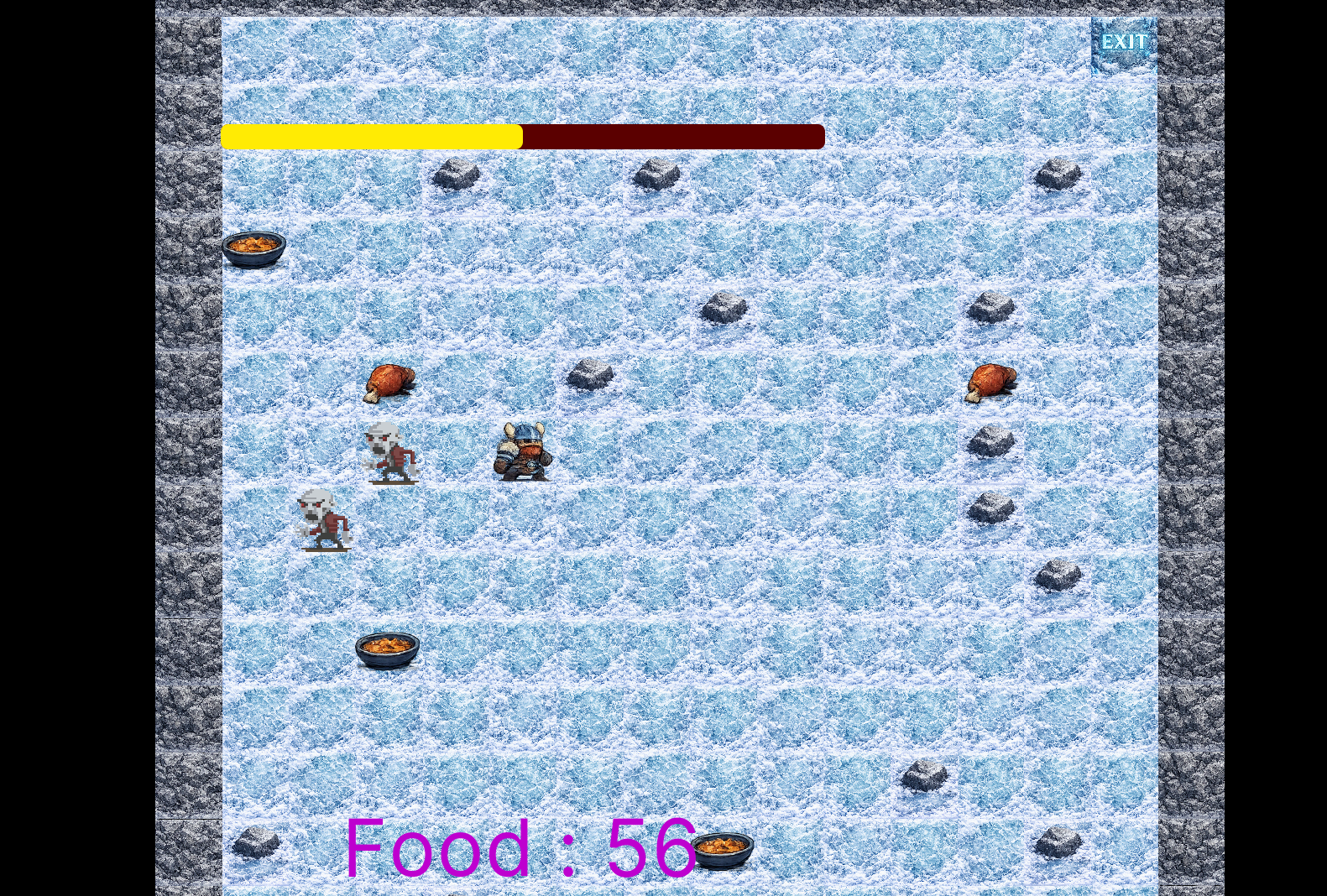
Project Overview
This project recreates a traditional roguelike gameplay loop using modern Unity systems. Built as part of the Unity Learn curriculum, the focus was not visual fidelity, but systems design: turn order, procedural content, AI decision-making, and state management.
- Unity 2D
- C#
- Turn-Based Systems
- Procedural Generation
- AI Behavior
- UI Feedback
Design Goals
The project was approached as a systems exercise rather than a prototype. Every mechanic needed to support scalability, clarity, and deterministic behavior.
-
Turn-based clarity
Every action resolves in a predictable order. No overlapping input, no race conditions, and no frame-dependent logic. -
Procedural replayability
Levels are generated dynamically using constrained randomness while preserving navigability and gameplay balance. -
Simple, readable AI
Enemy logic prioritizes debuggability and intent over complex pathfinding. -
Clear player feedback
UI, audio, and visual responses reinforce cause-and-effect for every action.
Core Architecture
The game is structured around a central GameManager that coordinates turn order, level progression, and persistent player state.
    ┌──────────────────────────────┐
    │         GameManager          │
    │------------------------------│
    │ Level Progression            │
    │ Turn Control                 │
    │ Game Over State              │
    │ Player Persistence           │
    └──────────────┬───────────────┘
                │
        ┌─────────┴─────────┐
        │                   │
    ┌──────────────┐   ┌──────────────┐
    │ BoardManager │   │ Turn System  │
    │--------------│   │--------------│
    │ Dungeon Gen  │   │ Player Turn  │
    │ Spawn Logic  │   │ Enemy Turn   │
    └──────────────┘   └──────────────┘
All gameplay systems route through a single authoritative controller. This prevents desynchronization between player input, AI behavior, and world state.
Procedural Dungeon Generation
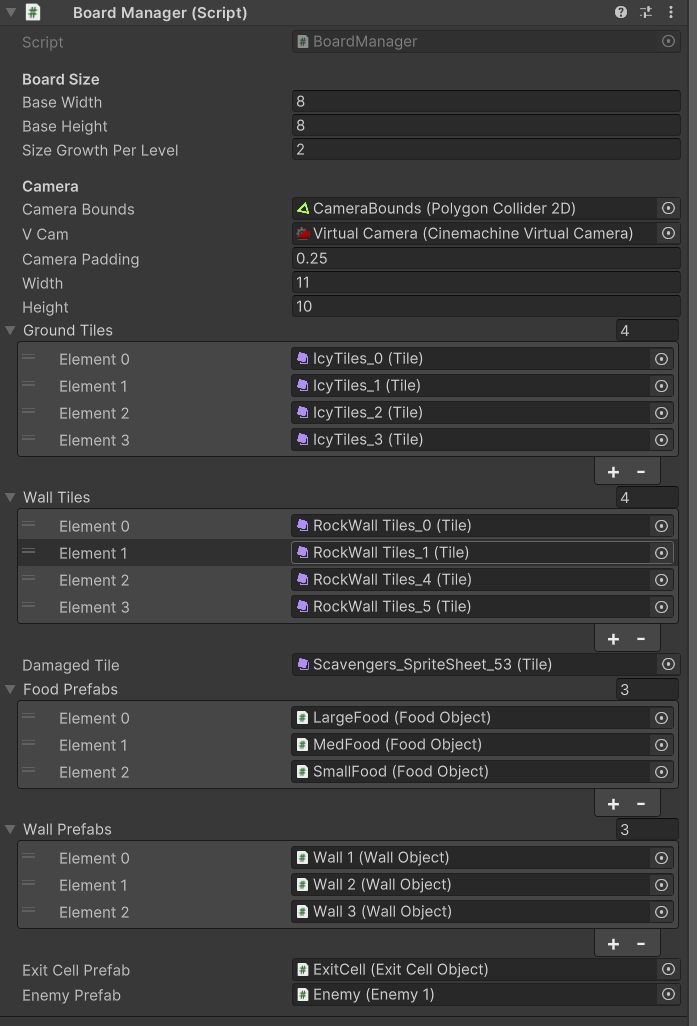
Each level is generated at runtime using a grid-based system. The dungeon layout changes every playthrough while maintaining consistent gameplay rules.
- Outer walls define level boundaries
- Interior tiles are filled with walkable floor
- Obstacles are placed using randomized empty cells
- Enemy and item spawns use tracked free positions
Player & Turn-Based Movement
The player operates entirely within the turn system. Every input resolves into a single action: move, attack, or wait.
- Movement consumes a turn and food resource
- Attempting to move into an enemy triggers an attack
- Blocked movement prevents wasted turns
This design guarantees fairness: the player and enemies always act under the same rules.
Enemy AI Behavior
Enemy behavior is intentionally simple and deterministic. Each enemy performs exactly one action per enemy turn.
- Enemies track player position
- Movement prioritizes X or Y axis based on distance
- Adjacent enemies attack instead of moving
This approach avoids complex pathfinding while producing readable, predictable combat encounters.
Resource Management & Survival
Food serves as both health and a time constraint. Every action pushes the player closer to failure.
- Movement consumes food
- Enemy attacks reduce food
- Pickups restore food and extend survival
UI & Player Feedback
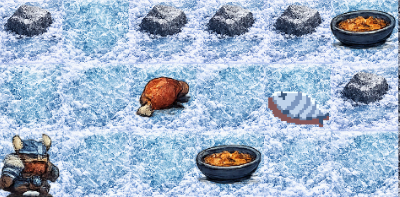
Feedback systems reinforce every player action and consequence. The UI communicates state clearly without overwhelming the screen.
- Food counter updates per action
- Screen flashes on damage
- Level transition text reinforces progression
- Game Over screen halts input and communicates failure
Play RogueLike2D
This project is available to play on Unity Play. The build demonstrates turn-based systems, procedural generation, AI behavior, and the UI feedback loop described above.
What I Learned
RogueLike2D reinforced that strong games emerge from strong systems. Simplicity, clarity, and deterministic logic outperform complexity when building scalable gameplay.
-
Turn-based games demand strict control flow
Input must be gated and actions serialized to prevent logic errors. -
Simple AI can still feel intelligent
Predictability allows players to learn and plan. -
Procedural systems need constraints
Randomness is only fun when bounded by design rules.